The fence had been going for a while before it finally gave up. That's usually how it goes. A post rots slowly at ground level, the panel starts to lean, and one good autumn storm is all it takes. This one in Chertsey had been leaning since October. By the time they called me in January, three panels had come fully down and a fourth was propped up against the remains of the post with a brick.
A Fence That Had Quietly Failed
The problem wasn't purely aesthetic. They had a dog, a large, perpetually enthusiastic one, and the gap where the panels had been was an obvious invitation. He'd found it twice already in a fortnight and ended up in a neighbour's vegetable patch on both occasions.
There was also the privacy question: the garden backs directly onto a public footpath, and they'd found the open view considerably less comfortable than they'd expected once the fence went down.
The Real Problem Was the Posts
When I visited the site, it became clear quite quickly that the problem was the posts, not the panels. The original fence had been put up on wooden posts, common for a job done fifteen or twenty years ago, and they'd done what wooden posts tend to do in Surrey clay: absorbed moisture at ground level and rotted from the inside out.
You can replace the panels on a wooden-post fence as many times as you like, but if the posts have gone, the fence will always be compromised. You're putting new panels on a foundation that's already failing.
Why Concrete Posts Made Sense
My recommendation was a full replacement using concrete posts and gravel boards. It costs a little more upfront than patching the existing run, but it's the honest answer. Concrete posts last for decades. The gravel boards protect the base of each panel from direct contact with the soil, which is where moisture does most of its damage. Done properly, the fence they were getting would outlast the previous one by a significant margin and wouldn't need the same conversation again in twenty years.
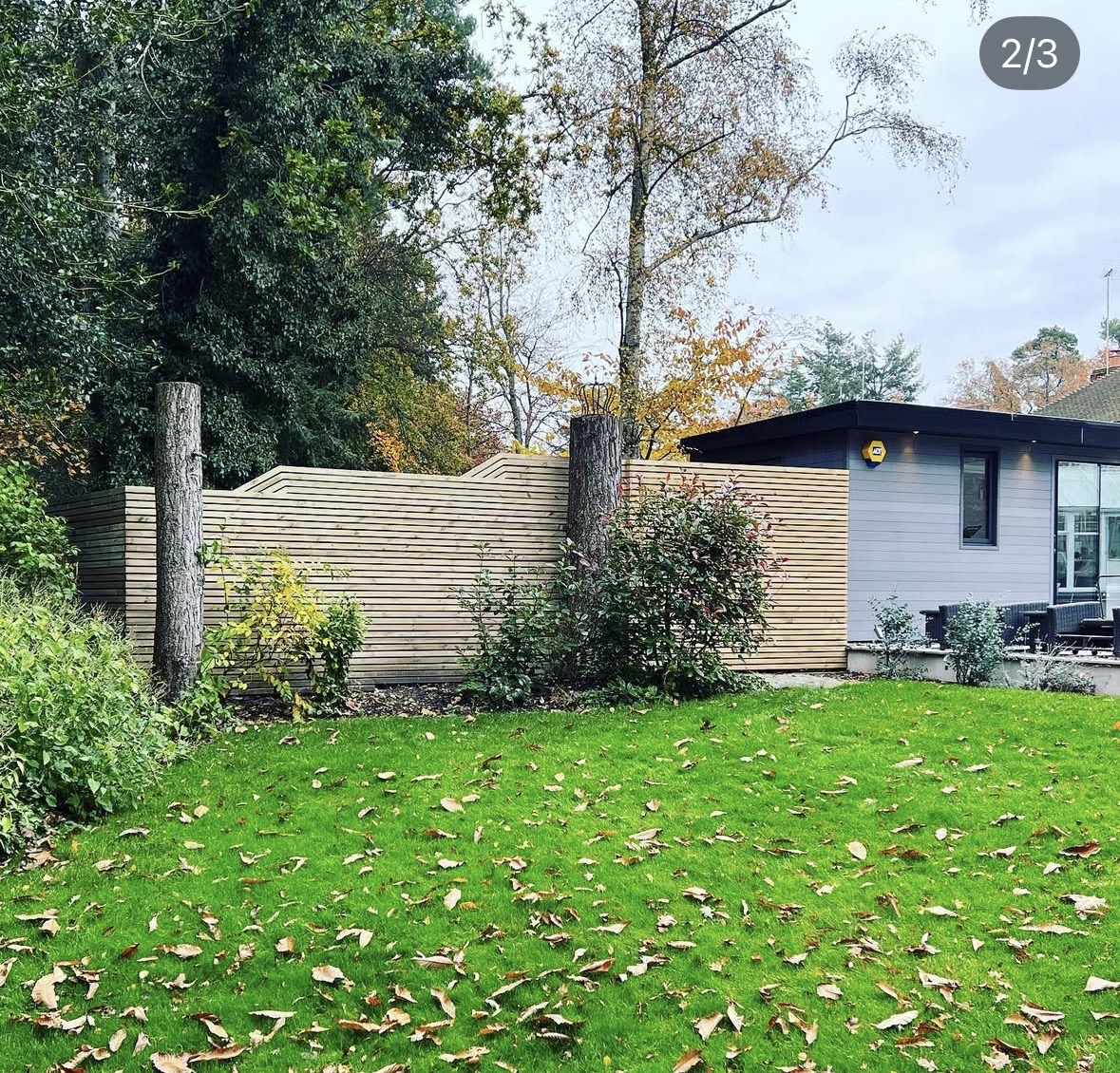
They went with slotted panel fencing, which was the right choice for a long, straight run along a path boundary. With slotted posts, the panels slide into concrete channels, which means if a panel does get damaged in a future storm, you can replace it without touching the posts at all. That kind of replaceability matters when your fence is exposed to weather and public proximity year after year.
Got a Failing Fence?
Whether it's a single panel down or the whole run on its way out, Josh is happy to come and take a look. Garden fencing in Surrey starts from £270 per bay, concrete post, panel, and gravel board included.
Get a Free QuoteThe Job Itself
The job itself took a day and a half. We removed the old fence, grubbed out the existing posts, and set the new concrete posts in compacted hardcore bases. The panels went in the following morning once the posts had had a night to firm up properly. Gravel boards in first, panels slotted in from the top, and that was it.
What Makes Fences Fail Early
A few things make fencing jobs fail before their time. Posts not set deeply enough. Panels forced into position rather than levelled properly. Gravel boards skipped to save an hour on the day. None of those shortcuts are visible once the fence is standing, which is what makes them tempting. The difference shows up two or three years later when the fence starts to move.
The other thing worth knowing is that not all fencing is the same job. A standard slotted panel run on a clear boundary is one day's work. A batten fence with a more complex design, or a site with complicated groundwork, takes longer and costs accordingly. It's worth having someone look at the site before you commit to a figure, which is always the starting point with any job I quote.
When I left that site in Chertsey, the garden was properly enclosed for the first time since October. The dog spent the afternoon patrolling his territory with great purpose. The homeowner said it was the first time they'd actually used the garden since the autumn storms came through.
There's something quietly satisfying about a fencing job done right. It's not glamorous work. But a fence that stays straight for twenty years, keeps the dog in, and asks nothing of you is exactly what you want when you pay for one.
If you've got a fence that's looking questionable, whether it's a single panel down or the whole run on its way out, I'm happy to come and take a look. Based in Egham, I work across Chertsey, Staines, Weybridge, Windsor, and throughout Surrey. Get in touch and we can go from there.